Be the first to get exclusive No Deposit bonuses and WOW casino promotions! Get access to our new online casinos, top stories and special iGaming events for FREE.
Be the first to get exclusive No Deposit bonuses and WOW casino promotions! Get access to our new online casinos, top stories and special iGaming events for FREE.
Be the first to get exclusive No Deposit bonuses and WOW casino promotions! Get access to our new online casinos, top stories and special iGaming events for FREE.
Be the first to get exclusive No Deposit bonuses and WOW casino promotions! Get access to our new online casinos, top stories and special iGaming events for FREE.
Be the first to get exclusive No Deposit bonuses and WOW casino promotions! Get access to our new online casinos, top stories and special iGaming events for FREE.
Be the first to get exclusive No Deposit bonuses and WOW casino promotions! Get access to our new online casinos, top stories and special iGaming events for FREE.
Be the first to get exclusive No Deposit bonuses and WOW casino promotions! Get access to our new online casinos, top stories and special iGaming events for FREE.
Be the first to get exclusive No Deposit bonuses and WOW casino promotions! Get access to our new online casinos, top stories and special iGaming events for FREE.
Be the first to get exclusive No Deposit bonuses and WOW casino promotions! Get access to our new online casinos, top stories and special iGaming events for FREE.
Hi, I'm Deni! I'm a research obsessive with a passion for gambling regulations, market trends, and casino news. I dig deep into every topic I cover - so every article, review, or guide I write is built on solid research and real detail.
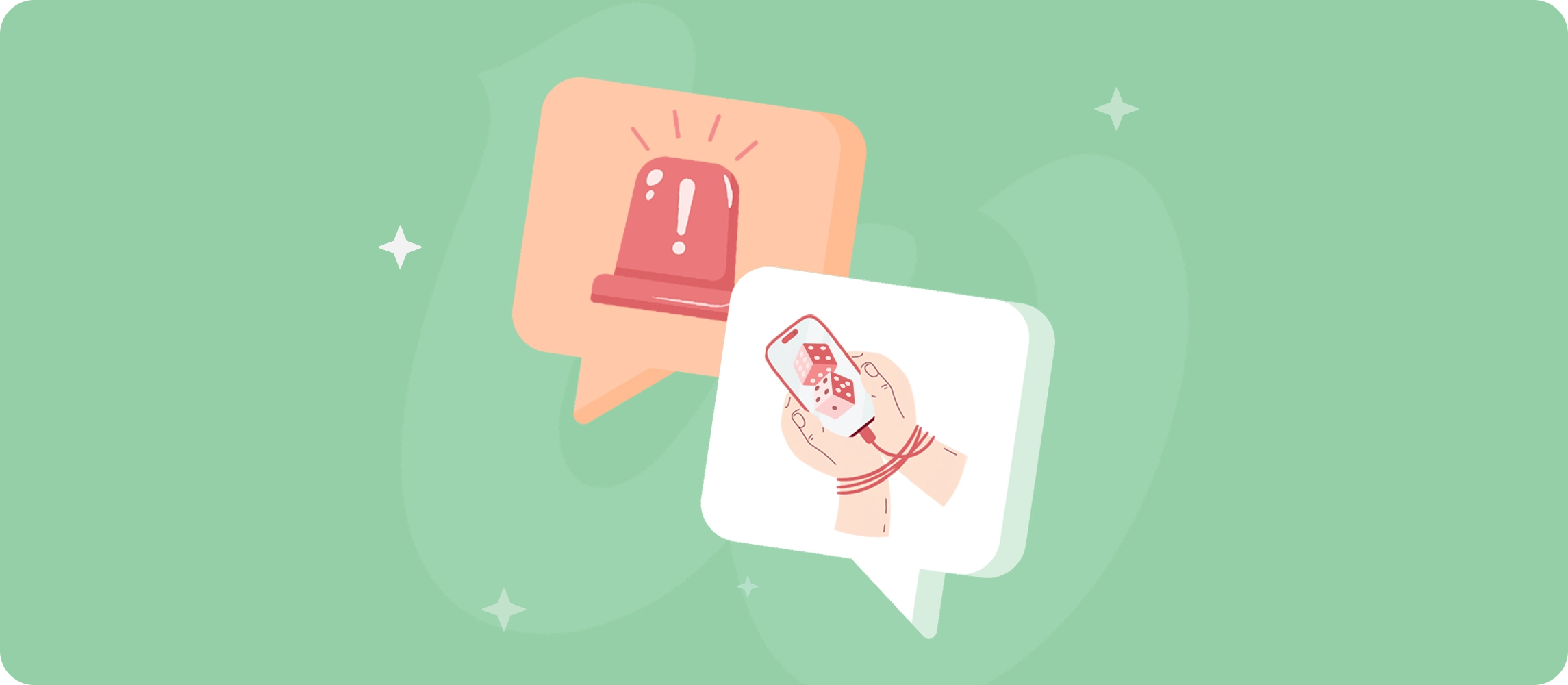
Online gambling is a form of entertainment countless people across the globe enjoy on a regular basis. While it is ideally created for gameplay and daily entertainment, it can also pose a threat if you start relying on it too much or even attempt to use it for something other than entertainment.
And you know what they say, too much of a good thing becomes a bad thing. That doesn’t mean you need to stop gaming altogether, but instead, you may need to take a closer look at how you practice these forms of entertainment and what they mean in your life.
It doesn't matter if you’re a casual player simply looking to learn or someone looking for advice. Today, we are here to help you get a better understanding and point you towards tools and resources for the safest possible gaming.
Looking at statistics
To understand the scale of gambling and why it is such an important topic among all leading platforms in the industry, from platforms like CasinoWow to industry regulators, we need to take a closer look at its current impact.
How to spot gambling addiction and how to get help
According to the World Health Organisation, there are about 1.2% of adults who currently have a gambling disorder. The UK organisation, GambleAware, estimates that around 2.2 million people are affected by problem gambling, of which 340,000 are experiencing serious harm.
Self-exclusion Service, GamStop has registered over 560,000 users since 2018, and 78% report positive outcomes. While online gambling is quick and convenient, it is also incredibly risky. Stats indicate that around 81% of problem gamblers have admitted to gambling online.
What these stats show is that not only is problem gambling an actual and current problem, but it also deserves to be highlighted to help with early recognition of potential issues developing and intervening before it becomes too serious.
With the aim being not to address gambling only at its worst, but to take a closer look at all the ways to prevent it altogether and put the focus on how to play responsibly.
What is gambling addiction?
If you’re new to online gambling or playing games, you may be wondering what a gambling disorder or compulsive gambling behaviour is altogether.
In essence, it is a behavioural addiction where you feel the uncontrollable urge to gamble. It becomes a need that takes up a lot of time and resources, despite the outcome. Even with a negative outcome, you’ll continue to play.
In the DSM-5, it is classified as a non-substance-related disorder that has the same type of impact as an alcohol or drug addiction. It is a real addiction that can lead to many lifelong problems.
Signs of problem gambling
There are a lot of signs, and in many cases, some signs are easy to miss, especially at first. But some of the signs may point to a deeper issue. Here are a couple of the most common indications:
Gambling thinking 24/7 – When you’re thinking about betting or even planning your next betting opportunity, you're constantly doing so. Meaning it takes up most of your day, even if you’re not actively participating, your mind is constantly on it.
Lying – You start lying about the amount of time and funds spent on gambling. The minute you start hiding a habit or even a source of entertainment, it becomes dangerous waters, and you need to seek support. If it’s something to be ashamed of, then it’s time to address it.
Borrowing or stealing funds – If you need to borrow money or even steal money to satisfy the urge, then it is a big red flag. Gambling should never be funded with money that is not yours.
Skipping out on responsibility – When you start finding reasons to skip work, school, family obligations or other important events to satisfy your urge to gamble.
Chasing losses – If you no longer play for enjoyment and end up spending more because you keep believing the losses are bound to be turned around, and victory is around the corner. You should never participate in gambling to win back lost money.
Emotional instability – If your moods are affected and the way you function is determined by your (in)ability to satisfy the craving. If you try to cut back and start showing signs of withdrawal (e.g., mood swings or irritability), then this is a big warning sign.
Using gambling as a form of escape – Gambling is a great tool for distraction, which means it can be easy to do it during times of stress, anxiety, or even depression. The best course of action would be to process emotions, instead of using gambling to ignore them altogether.
Anyone with four or more of these behaviours may be struggling with a gambling disorder and needs to get help as soon as possible.
Who is most affected?
While gambling can be dangerous to all, there are certain demographics that have been identified as most vulnerable to gambling addiction:
The youth
According to the statistics, younger and middle-aged people are the most at risk. The studies indicate that people in their early 20s are currently the fastest-growing group of gamblers, thanks to advanced technology in games and casino accessibility via mobile. While teenagers and young adults are more likely to develop gambling problems due to early exposure.
In the US, about 45% of men aged between 18 and 35 have reported at least one gambling-related issue.
Gender-based
It turns out that men are more likely to develop a gambling addiction than women because they are the most daring in terms of betting. They are also more prone to take part in high-risk betting, such as sports betting and online casino games.
Women, on the other hand, prefer something cute and simple like slot games or scratch cards, but that doesn’t mean they are completely ruled out, as these games can also lead to addiction over time.
Other addictions
You’ll also find that nearly 96% of people with a gambling problem have other co-addictions besides their gambling problem at that moment. This can include substance use disorders, mood disorders like depression, impulse-control disorders, or anxiety disorders.
There’s a lot of risk and hard resets that will need to take place for these people once an addiction has been set.
How to address gambling addiction
There are a couple of things that need to take place to successfully address gambling addiction.
1. Decision to change
The first step is to realise that you have a problem and to follow that with a firm decision to change. This means you need to accept responsibility for your decisions and mistakes. Understand that gambling is not a quick fix solution to solve financial struggles and take the step to get professional help.
2. First steps
Once you’ve acknowledged there’s a problem, you need to get serious about removing it altogether.
This means:
Opting forself-exclusion – Banning yourself from all gambling sites and casinos.
Blocking gambling-related transactions – You can contact your bank to ask for a block on these.
Form an accountability network – Tell someone you love and trust that you have a problem and you want to change.
3. Face the facts
Next, you want to deal with one of your biggest challenges, which is often financial damage. Your priority is to rebuild, so you need to focus on:
The problem didn’t occur in just a couple of days. So, the recovery won't be quick or easy either. It’s a gradual process that will require continuous effort, patience and above all, commitment.
You may take months or even a couple of years to regain full control, depending on how bad the addiction is, how committed you are to change and the level of support you are receiving.
Responsible gambling resources
There are many resources that can provide help and organisations you can reach out to. Below, we have listed just a few examples of those you can turn to for help. You can find the full list in the 'Play Safe' section on our website.
GamCare
GamCare provides free information, advice and support to problem gamblers. They offer free counselling services and self-assessment tools. They also have online support groups and forums.
They have a live chat option, or you can contact their 24/.7 National Gambling Helpline (UK) at 0808 8020 133.
GambleAware
GambleAware also has free help and resources, and you can contact them if you’re worried about yourself or someone else. They have online chat support, treatment referrals, and self-help resources and information.
You can contact them via live chat or the 24/7 National Gambling Helpline at 0808 8020 133.
GamStop
It offers a free self-exclusion option for UK players. It means that you can self-exclude from all UKGC-licensed gambling sites and apps and you can choose to do it for up to 5 years. This helps prevent creating new gambling accounts throughout the exclusion period as well.
Don't be afraid to ask for help
All in all, getting yourself or someone you love the deserved help is much easier now, especially when you consider the many organisations that are working around the clock. There's nothing shameful about it! It might feel scary, though, but just know that you're not alone.
Reach out to one of the countless organisations and get the help you deserve and need. There are resources available to provide assistance for those suffering from addiction and their loved ones. For more information, you can watch our short documentary on responsible gamblingBET ON CHANGE or browse through the responsible gambling guides on our website.
Hi, I'm Deni! I'm a research obsessive with a passion for gambling regulations, market trends, and casino news. I dig deep into every topic I cover - so every article, review, or guide I write is built on solid research and real detail.
We use cookies to improve your user experience. By continuing to use this site, you are agreeing to our use of cookies as described in our Cookie Policy.
Subscribe for Exclusive Offers!
Keep in mind that you can also share our articles and reviews on social media!












 Casino Reviews
 Free Slots
 No Deposit Bonus
 Crypto Casinos
 Bonuses
 WOW Awards
 Casino Jokes
 Big Wins
 Casinos by Country























 Share on Facebook
 Share on X
 Share on Instagram